
1. Why Pickup and Return Inspections Go Wrong
Pickup and return vehicle inspections are critical to the car rental business. Yet, they often break down for the same reasons: handovers get rushed at busy times, staff skip steps, and key information is easily lost. Without a car rental inspection checklist, staff may forget to check important items. Photos are often taken with personal phones and get scattered or deleted, making them hard to find later. Staff may miss existing damage or not note it properly, and when a damage dispute comes up, it’s nearly impossible to prove the car’s condition at pickup. Searching for vehicle inspection records can be time-consuming and frustrating, especially when the car is already back on the road.
2. What a Good Vehicle Inspection Record Contains
A reliable inspection record is the backbone of smooth handovers and dispute-free returns. It should include:
- Vehicle details: Make, model, registration, and which rental it belongs to
- Date and time of inspection
- Staff member who performed the check
- Odometer reading and fuel level
- Exterior and interior photos taken of the vehicle
- Documents handed over (e.g., registration, insurance)
- Notes of any existing damage (scratches, dents, etc.)
These details form the vehicle condition report, a clear, dated snapshot of the car’s state at both pickup and return. This is essential for rental vehicle damage tracking and for resolving disputes later.
3. The Car Rental Pickup Process, Step by Step
A consistent car rental pickup process makes inspections faster and more reliable. Here’s an effective order:
- Prepare and clean the car so it’s easy to inspect.
- Confirm the driver’s details and documents: Check licence, booking, and contact information.
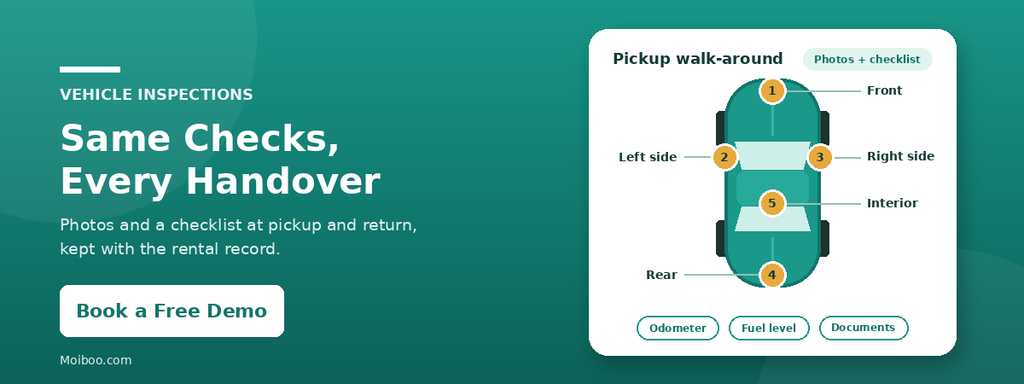
- Walk around the car, taking photos of all sides, interior, and key details.
- Record odometer and fuel level.
- Note any existing damage with photos and written notes.
- Hand over the keys and required documents.
Moiboo’s Start Rental form makes this process seamless by recording the start date and time, odometer, fuel level, branch, and all driver details (name, mobile, licence number, and expiry date), all tied to the rental record.
4. The Return Inspection, Step by Step
The rental car return inspection is most effective when it mirrors the pickup process:
- Repeat the same checks in the same order walk around, take matching photos, and compare with the pickup record.
- Note any new damage or changes in condition.
- Record odometer and fuel level.
- Check for missing documents, keys, or cleanliness issues.
- Decide on any charges or deposits to hold, as allowed by the agreement.
Consistency ensures you spot differences quickly and fairly, making rental return management smoother for staff and customers.
5. Use a Fixed Checklist (Car Rental Inspection Checklist)
A fixed car rental inspection checklist guarantees that nothing is skipped. Here’s a sample: Item: What to Record: Fuel level: Exact reading or photo; Tyres: Tread, visible damage; Interior: Cleanliness, stains, rips; Exterior: Scratches, dents, paintwork; Odometer: Exact reading or photo; Documents: Registration, insurance status; Keys: Returned, functional; Cleanliness: Overall state, trash removed
This checklist should be used for every car, every time.
6. What to Look for in Vehicle Rental Inspection Software
Switching from paper forms and phone photos to vehicle rental inspection software saves time and headaches. The best software for digital vehicle inspections should:
- Work on a phone at the vehicle, not just a desktop
- Tie every photo and note to a specific rental agreement
- Record the date, time, and staff member for each inspection
- Make all vehicle condition reports and photos easy to find and download
- Allow quick access to past inspections for dispute resolution
Digital vehicle inspections mean you’re never stuck hunting for a missing photo or note—the entire record is attached to the rental.
7. How Moiboo Handles Pickup and Return Inspections
Moiboo is purpose-built for car rental handover management, giving you a structured, repeatable process:
Mobile Check-Out Inspection
- Start with a check-out form: Enter start date, time, branch, driver details, odometer, and fuel level.
- Take photos of the vehicle: Use your phone or tablet to capture the exterior (front, rear, sides, angles), interior, odometer, and handed-over documents. All photos are instantly linked to the rental.
- Complete a digital checklist: Tick off fuel, tyres, interior, exterior, any damage (with optional notes), and documents.
- Vehicle card view: Shows the odometer, branch, and key details at a glance.
Check-In on Return
- Matching check-in form: Record the return date, time, odometer, and fuel. Take matching photos and work through the same checklist as pickup.
Photo Records on the Agreement List
- Instant access: Each rental shows check-out and check-in photo buttons.
- Organized by views: Tabs for exterior, interior, odometer, and documents, with views such as front, rear, both sides, and angles.
- Full audit trail: Each photo set shows the date, time, and staff member. Download all photos at once if needed.
Vehicle Swaps
- Replace Vehicle form: When a car is swapped mid-rental, record the new vehicle’s odometer and fuel, and log the outgoing car’s final odometer. This keeps the rental vehicle damage tracking and usage accurate.
Place in the Rental Flow
- End-to-end management: From Start Rental and Check-out & Handover, through Check-in & Vehicle Return, to the Final Invoice, every step is logged and tied to the agreement.
8. From Inspection to Damage Tracking and Charges (Rental Vehicle Damage Tracking)
When a rental car is returned with new damage, clear vehicle inspection records make handling charges fair and transparent. The steps are:
- Flag new damage in the return checklist, with photos and notes
- Discuss the damage with the customer, referencing the records
- Apply only the charges allowed by the agreement
- Schedule maintenance if repairs are needed
Moiboo lets staff flag damage with notes, adjust billing for damage, cleaning, or mileage, and add remarks. The maintenance flow lets you schedule repairs and create a job card, keeping everything connected.
9. Using Records to Settle Disputes
When a customer disagrees about a charge, the best response is a simple, organized record:
- Photos from both pickup and return
- The completed checklist
- Date, time, and staff details for each inspection
- The signed rental agreement
- A clear written explanation of any charge
This approach builds trust and resolves most disputes quickly, without escalation.
10. Speeding Up Handovers Without Skipping Checks
Efficient handovers don’t mean cutting corners. Key tips:
- Inspect in good light so nothing is missed
- Follow the same order every time using a checklist
- Prepare cars before the customer arrives
- Train staff on using the checklist and software
- Take photos as you walk around instead of afterwards
These habits streamline inspections and ensure vehicle condition reports are always reliable.
11. Common Mistakes With Vehicle Inspections
- Skipping the inspection for regular or repeat customers
- Storing photos only on personal phones (hard to retrieve later)
- Using inconsistent checklists between staff or branches
- Not noting existing damage at pickup (leading to disputes later)
- Rushing the return inspection when busy
- Failing to link the inspection record to the rental agreement
12. A Simple Handover Checklist
Pickup Checklist:
- Clean and prepare the vehicle
- Check and record driver’s documents
- Walk around, taking photos (exterior, interior, odometer)
- Record fuel level and odometer
- Note any existing damage
- Hand over keys and documents
Return Checklist:
- Repeat the same walk-around, taking photos
- Check odometer and fuel level
- Note any new damage or issues
- Check cleanliness and missing items
- Decide on charges as per agreement
13. FAQ Section
A full inspection includes odometer and fuel readings, photos of the exterior and interior, documentation checks, notes of any damage, and confirmation of keys and paperwork.
Aim to cover all sides of the vehicle, the interior, odometer, and any visible damage. The exact number depends on your checklist and local requirements.
It’s best practice to have the customer present, but it’s not always required. Check your agreement and local rules.
Yes, repeat customers should get the same inspection as any other rental, to avoid missed damage or disputes.
Record retention depends on your local regulations and business needs. Keep them long enough to handle disputes and audits.
14. Conclusion
Fast, consistent vehicle inspections start with a single checklist, photos tied to each rental, and following the same steps for every pickup and return. With digital vehicle inspections, you improve accuracy, save time, and protect your business from disputes.