. Why Mileage Causes Disputes
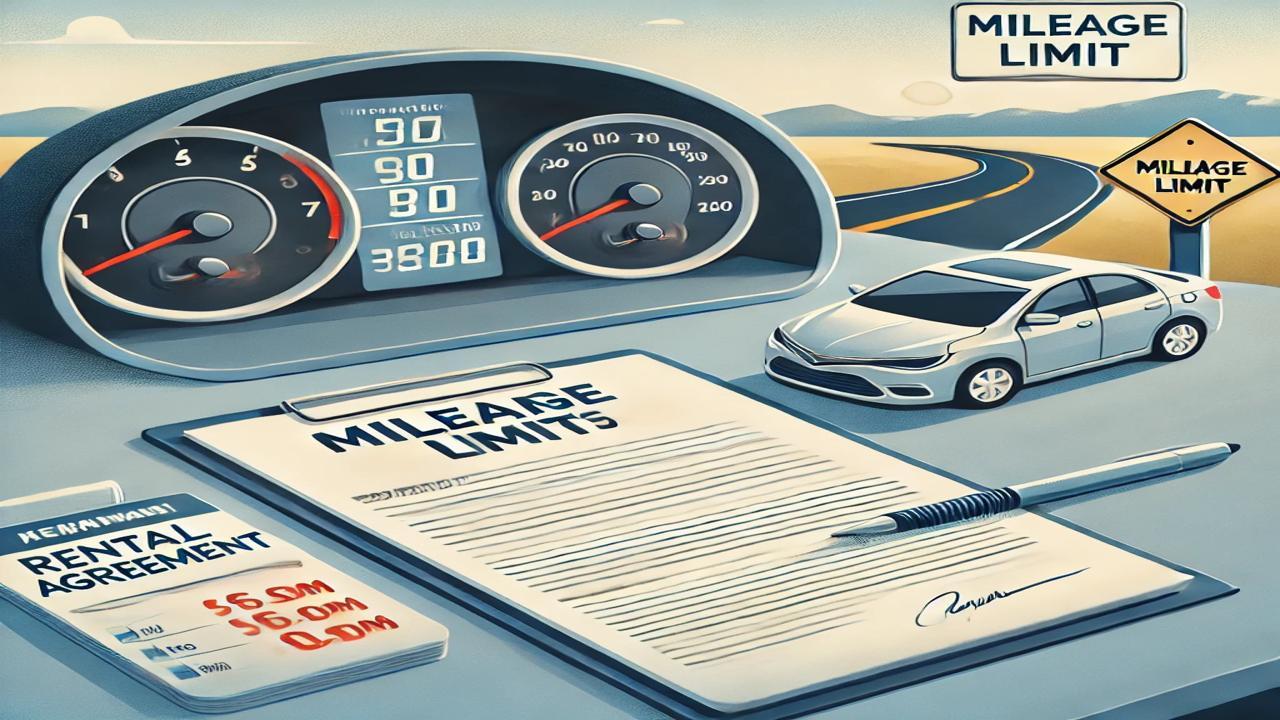
Mileage disputes are among the most common friction points in the car rental business. Most issues arise from:
- No clear mileage terms in the rental agreement: Without written rental agreement mileage terms, customers may assume different rules or challenge charges.
- No starting odometer record: Failing to record the odometer reading at pickup makes vehicle mileage management and car rental mileage tracking unreliable.
- No proof of ending reading: If the ending reading isn’t recorded (or photographed), it’s hard to prove how much the vehicle was actually used.
- Unclear calculations on the final bill: If excess mileage charges are added without clear explanation or supporting documentation, customers may dispute them.
Getting mileage right is not just about being fair—it’s about protecting your business and building trust with customers.
2. Why Rental Businesses Set Mileage Limits
Mileage limits are set for practical business reasons:
- Wear and tear: More distance means increased servicing, faster depreciation, and higher maintenance costs.
- Different rental types: Short holiday rentals may allow more flexibility, while rideshare or self-drive operators often need stricter vehicle usage tracking to protect assets.
- Capped vs. unlimited: Some businesses offer a capped distance allowance (with charges for exceeding it), while others offer unlimited mileage for a higher rate. Each model impacts car rental billing software setup and charge management.
What works best depends on your fleet, customers, and local market. Always check local regulations and seek professional advice as needed.
3. Step 1: Put the Mileage Terms in the Agreement
Start with clear, written rental agreement mileage terms:
- State the mileage allowance: Specify how many kilometres (or miles) are included and the period they cover (per day, per week, or total rental).
- Describe excess mileage charges: Clarify how extra distance is charged, how it’s measured, and how the rate applies.
- Explain how mileage is tracked: Make it clear that readings are taken at pickup and return.
- Address extensions and swaps: Explain what happens if the rental is extended or the vehicle is replaced.
Do not suggest specific allowances or rates; these depend on your business and local rules. If unsure, check local laws or seek professional guidance.
4. Step 2: Record the Starting Odometer Reading
Accurate car rental mileage tracking starts at pickup:
- Record the odometer reading and fuel level.
- Take a photo of the odometer.
- Show the reading to the customer and have them acknowledge it.
Using Moiboo: The Start Rental form records the odometer reading (in kilometres) and fuel level. The vehicle card displays the odometer reading next to the checkout checklist. Photos can be taken via the Odometer tab alongside Exterior, Interior, and Documents.
Documenting the starting point is essential for reliable vehicle usage tracking throughout the rental.
5. Step 3: Record the Ending Odometer Reading at Return
At return, repeat the process:
- Record the ending odometer reading and take a photo.
- Show the reading to the customer.
Using Moiboo: Check-in photos use the same tabs as check-out (Exterior, Interior, Odometer, Documents) and show the date, time, and staff member. There’s a Download All option, and records can be opened from the rental agreement list.
Recording both readings, with photographic proof, is key for transparent car rental charge management.
6. Step 4: Calculate the Extra-Mileage Charge
Calculate excess mileage charges using this method:
- Subtract the starting reading from the ending reading to get total distance driven.
- Subtract the total allowance (as per the agreement). If the result is positive, that’s the extra distance.
- Multiply the extra distance by the agreed rate per kilometre to get the excess charge.
If the rental is extended, increase the allowance accordingly. If the vehicle is replaced mid-rental, split the driven distance between the two vehicles based on their individual odometer readings.
Using Moiboo: The Replace Vehicle form shows the outgoing vehicle’s odometer reading and records the new vehicle’s reading and fuel level, so you can work out each car’s usage.
7. Step 5: Add the Charge to the Invoice
For clear car rental billing records:
- Add the excess mileage charge as its own line item.
- Show the distance, calculation, and remarks.
Using Moiboo: Use the Excess Mileage charge category in billing adjustment (alongside late, cleaning, and damage fees). Staff enter the amount and remarks, choose whether the charge applies to the current invoice (creating a credit or debit note) or the next one, and select tax exclusive or inclusive. Each charge appears as its own line item on the invoice.
Being transparent about charges reduces disputes and shows professionalism.
8. Step 6: Explain the Charge and Keep Proof
- Share the starting and ending readings, the allowance, and the calculation with the customer.
- Keep the odometer photos and the agreement in your records.
This practice makes it easy to explain charges and resolve any customer queries later.
9. Mileage-Based Rental Pricing
Car rental mileage tracking can influence your pricing models:
- Capped allowance: Most rentals include a set distance with excess mileage charges if exceeded.
- Unlimited mileage: Some rentals offer unlimited distance at a higher rate.
- Longer rentals: Businesses may offer different mileage structures for longer-term agreements.
The best approach depends on your fleet, customer base, and competitive landscape. Always tailor your policy to your business and seek local advice when needed.
Special Cases
Some situations require extra care in vehicle mileage management:
- Odometer appears faulty: Record the issue with a note and photo. Consider having the vehicle inspected and pausing charges if needed.
- Rental paused due to breakdown: Note the situation, record odometer readings, and take a photo at the pause and resumption.
- Rental extended: Update the agreement, adjust the allowance, and record any additional readings if the vehicle is used during the extension.
- Vehicle swapped mid-rental: Record the outgoing and incoming vehicle’s odometer readings and fuel levels, with photos and a note explaining the swap.
Always document what happened to protect both your business and the customer.
Common Mistakes With Mileage
Avoid these pitfalls in car rental mileage tracking:
- No mileage terms in writing.
- Not recording the starting odometer reading.
- No odometer photo at pickup or return.
- Charging for extra distance without showing the calculation.
- Forgetting to update the allowance for extensions.
- Ignoring distance on a replaced vehicle.
A Mileage Checklist
At Pickup:
- Record the starting odometer reading and fuel level.
- Take and save a photo of the odometer.
- Confirm the reading with the customer.
During Rental:
- Record any changes (extensions, swaps, breakdowns) with notes and photos.
At Return:
- Record the ending odometer reading and fuel level.
- Take and save a photo of the odometer.
- Show the calculation and charge the customer if applicable.
FAQ
Mileage limits depend on your vehicle type, business model, and local regulations. Clearly state the limit in your rental agreement and make sure the customer understands it.
Subtract the starting odometer reading from the ending reading, subtract any included allowance, and multiply the excess by your agreed rate per kilometre.
Unlimited mileage can be attractive but may not suit every vehicle or business. Consider your fleet costs, customer needs, and local rules when deciding.
Record the issue, take a photo, and note it in your records. Consider inspecting the vehicle before charging for mileage.
Yes, but make sure to update the allowance in the agreement to reflect the new rental period. Always check local rules and communicate changes clearly.
Conclusion
Managing mileage limits and excess mileage charges comes down to clear mileage terms in the rental agreement, reliable odometer tracking, and transparent, itemized billing. By recording both starting and ending readings with photos and providing clear calculations, you make mileage fair, professional, and dispute-free.