1. Why Rates and Utilization Belong Together
A car that sits idle, no matter how high its rental rate, isn’t earning its keep. Conversely, a car rented most days even at a fair, not premium, rate, can contribute more to your bottom line. This is why effective car rental pricing strategy and rental fleet utilization must be managed together. Your revenue doesn’t just depend on what you charge per day; it depends on how many days each vehicle is actually earning for you. The goal: keep more of your fleet on the road at profitable rates.
2. Know Your Costs Before You Set a Rate
Before you set any rates, get a clear picture of your costs. These include:
- Vehicle purchase or financing: The cost to buy or lease each car.
- Depreciation: The loss in value over time.
- Insurance: Protection against accidents and liability.
- Registration and road charges: Licensing, registration, and any road use fees.
- Maintenance and repairs: Regular servicing and unexpected fixes.
- Cleaning: Preparing the car for each new rental.
- Staff and overheads: Salaries, rent, utilities, and other business costs.
- Fines and tolls handling: Costs you might incur on behalf of customers.
- Downtime: The cost of vehicles not being rented due to maintenance or other reasons.
Understanding these categories is the foundation of any successful car rental rate management approach.
3. How to Calculate a Daily Rate (Car Rental Pricing Strategy)
A straightforward way to set your daily rate is:
- Add up the yearly cost of owning and running the car (all the costs above), plus a share of your overheads and your desired profit.
- Estimate the number of days you realistically expect to rent the car out over a year. This is your expected utilization.
- Divide your total yearly cost plus profit by the expected number of rental days.
Formula in words:
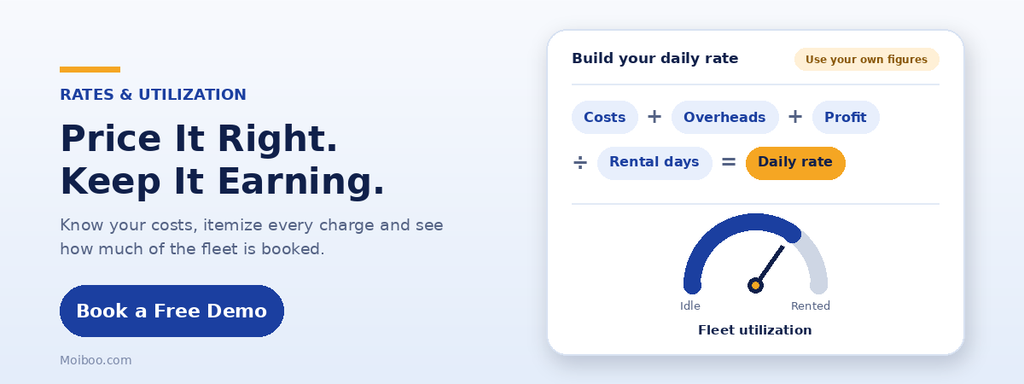
(Total yearly costs + desired profit) ÷ expected rental days = daily rate
Your expected rental days depend on your typical rental fleet utilization. The more days your cars are rented, the lower your daily rate can be while still covering costs and making a profit. Use your own figures for costs and realistic rental days; don’t just copy the competition.
4. Adjust Rates by Rental Length
Longer rentals, such as weekly or monthly agreements, are often priced at a lower daily rate than short-term rentals. Why? Fewer handovers, less idle time between bookings, and steadier income. This is a business decision for you to make lower daily rates for longer rentals can keep your cars out longer and reduce downtime, but always ensure you’re still covering your costs and profit targets.
5. Price Add-Ons and Surcharges Separately
It’s best practice to keep your base rental rate comparable by charging separately for extras and surcharges such as:
- Child seats
- Additional drivers
- Delivery or collection
- Airport pickups or drop-offs
- Cleaning
- Late returns
This transparency helps customers understand what they’re paying for and makes your rates competitive. Moiboo’s invoices clearly list each charge as its own line item, such as the main rental charge, airport surcharge, child seat, and additional driver, plus a subtotal and total. Staff can adjust bills by adding or waiving charges (like late fees or excess mileage), with remarks for clarity.
6. Understand Fleet Utilization (Vehicle Utilization Tracking)
Rental fleet utilization is simply the share of available vehicle days that are actually rented.
Fleet utilization formula (in words):
Number of rented days ÷ number of available days
Track this per car and for your whole fleet. Maintenance, late returns, and gaps between bookings reduce utilization. Monitoring these factors helps you see which vehicles are earning and which are falling behind.
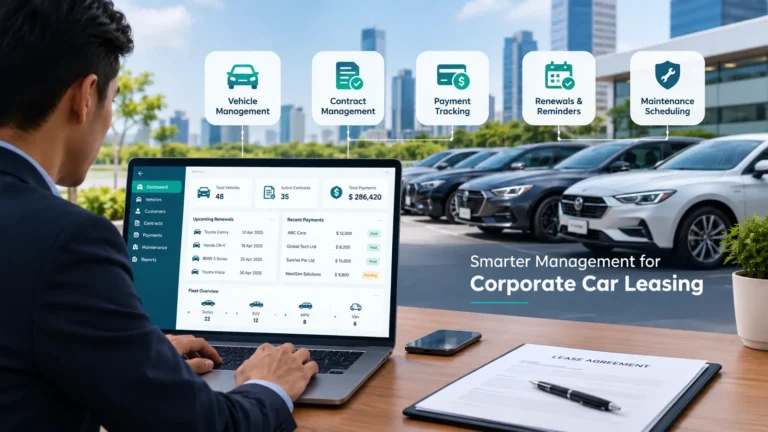
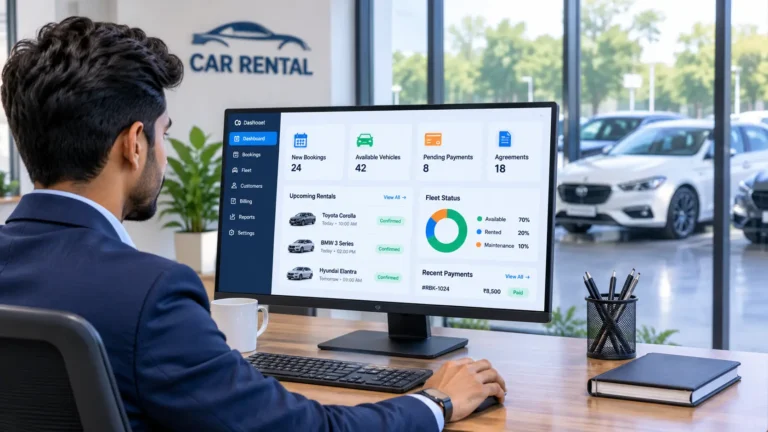
Moiboo’s fleet dashboard gives you a live snapshot: total fleet size, how many cars are available now, booked, or due/overdue, and each category’s share of the fleet. The calendar view shows availability by day, week, or month, including cars in maintenance. This is a real-time picture, not a historical utilization report.
7. Ways to Raise Utilization
Boosting utilization is about putting more of your fleet on the road, more of the time. Practical steps include:
- Schedule servicing during gaps between bookings.
- Chase up cars that are due back to minimize idle days.
- Quickly replace vehicles when one breaks down to keep agreements going.
- Fill short gaps with short-term rentals or one-way hires.
- Retire or replace underperformers cars that spend too many days idle.
- Size your fleet to match demand, so you’re not carrying more vehicles than you need.
Moiboo’s Replace Vehicle action helps you swap vehicles in an agreement (upgrade, downgrade, or same class) and shows the impact on remaining days and rates. Maintenance, pause, and resume actions keep your availability calendar accurate.
8. Manage Demand (Rental Demand Management)
Demand for rentals isn’t steady track patterns by season, weekday versus weekend, local events, and enquiry trends. Adjust availability and rates deliberately based on these signals. Don’t expect automatic or dynamic pricing; instead, use your observations to plan.
Moiboo’s CRM list shows you all current enquiries, including vehicle types, pickup dates, and sources, plus summaries of new enquiries, follow-ups, proposals sent, bookings confirmed, conversions, and average response time. These are valuable business analytics signals that help you respond to demand as it changes.
9. Use Promotions Without Giving Away Margin
Promotions should always have a goal such as filling off-peak periods or rewarding repeat customers—and you should know the cost of each promotion before running it. Common types include petrol bonuses, no-claim bonuses, or free rental days. When extending a rental, you can choose to continue billing or apply free days as a promotion in Moiboo. This keeps your offers purposeful and protects your margin.
10. Track the Numbers That Show Profitability
Key car rental profitability measures include:
- Average daily rate: Rental revenue divided by rented days.
- Revenue per vehicle: How much each vehicle earns in a period.
- Utilization: The share of days your fleet is rented.
- Downtime: Days when cars are unavailable.
- Overdue returns: Cars not returned on time.
Review these numbers monthly to spot trends. Fleet performance reporting and car rental business analytics give you the insight to adjust your car rental rate management and fleet strategies, but remember: these are measures to monitor, not targets to expect.
11. Common Mistakes in Rental Pricing and Utilization
Avoid these pitfalls:
- Copying competitors without knowing your own costs.
- One flat daily rate for all rental lengths.
- Bundling add-ons into your base rate.
- Counting “busy” cars without tracking actual rental days.
- Ignoring downtime from maintenance or late returns.
- Discounting without knowing the real cost to your business.
12. A Monthly Pricing and Utilization Review
Use this checklist each month:
- Review utilization per vehicle.
- List cars with the lowest usage.
- Check downtime and overdue returns.
- Review income from add-ons and surcharges.
- Review promotions used and their effects.
- Adjust rates or fleet size as needed.
FAQ Section
Add up all annual costs for a vehicle, include a share of overheads and your desired profit, then divide by the number of days you realistically expect to rent out the car. This gives you a daily rate that covers your costs and target margin.
There’s no single answer—it varies by market, vehicle type, and season. Track your own utilization trends and aim to improve them over time.
Schedule servicing during idle periods, fill short gaps with shorter rentals, chase overdue returns, retire underperforming vehicles, and match fleet size to demand.
Many car rental businesses offer lower daily rates for longer rentals to reduce handovers and idle time, but it’s a business decision. Make sure longer-term rates still cover your costs and deliver a profit.
Rental pricing software can help analyze costs, market trends, and competitive rates. Moiboo focuses on invoicing and rental operations, not automated rate optimization, so you’ll still need to set and review your rates manually.
Conclusion
Setting the right rental rates starts with knowing your costs. Maximizing utilization ensures you cover those costs and keep your fleet earning. Regular monthly reviews of both pricing and utilization keep your business on track and profitable.